Most homeowners go into a remodeling project with a timeline in mind. A bathroom done in three weeks.
A kitchen wrapped up before the holidays. A finished basement ready by spring. Then reality sets in.
Delays are one of the most common frustrations in residential remodeling, and they cost more than just time. A project that runs long means disrupted routines, extended contractor access to your home, and in some cases, additional expenses that were not part of the original budget.
The good news is that most delays are preventable. Not all of them, but enough that a homeowner who plans carefully will almost always have a smoother experience than one who does not.
This guide breaks down the most common reasons remodeling projects stall in Bucks County and what you can do before construction begins to stay on track.
Why Remodeling Projects Take Longer Than Expected
Here is something most contractors will tell you honestly: delays are not the exception in residential construction. They are the norm. Even well-run projects encounter something unexpected.
In Bucks County, the housing stock adds complexity that homeowners in newer developments may not face. Many homes in the area were built before 1980. This can mean older plumbing, electrical systems that do not meet current code, and foundation types that vary by street.
When walls come down and floors come up, what is behind them often does not match what was on the original plans, and that creates decisions that take time. The sections below cover the most common causes so you can prepare for them before they become problems.
The Pennsylvania Department of Labor and Industry outlines construction code requirements that apply to most remodeling projects in the state. Knowing those requirements exist before you start is an important first step. Learn more here.
Permit and Inspection Delays
One of the most consistent causes of project slowdowns is the permitting process. In Pennsylvania, most kitchen,bathroom, and basement remodels that involve plumbing, electrical work, structural changes, or ventilation upgrades require permits before work can legally begin.
Permit processing timelines are not uniform across Bucks County. Each township and municipality operates its own process.
Some move quickly. Others have longer review windows depending on staffing, workload, and the complexity of what is being submitted.
A project in Doylestown Township may move through permits on a different schedule than one in Bristol Township.
When permits are skipped or pulled late, the consequences go beyond a delayed start. Work that does not pass inspection may need to be torn out and redone. Unpermitted remodeling surfaces during home sales and refinancing. It creates liability that falls on the homeowner, not the contractor.
Ask any contractor you are considering a direct question before signing anything: Will you pull all required permits before construction begins? A contractor who hesitates on that question is worth reconsidering.
For general permitting guidance in Pennsylvania, visit the PA Uniform Construction Code permit page. For local land use context in Bucks County, the Bucks County Planning Commission is a useful resource.
Material Shortages and Supply Chain Issues
Even when permits move smoothly, materials can hold a project back. Lead times for tile, cabinetry, plumbing fixtures, and specialty items have extended significantly in recent years.
Custom cabinetry that once arrived in four weeks may now take ten or twelve. Imported tile with a long production run can push a start date back by a month.
Bucks County is not isolated from these pressures. Regional distribution networks and local demand both affect what is available and when.
The solution is straightforward but requires discipline: select and order all materials before demolition begins. Not during. Not after the walls are already open.
Substituting materials mid project is more disruptive than it sounds. A tile swap affects grout quantities, layout plans, and potentially installation labor estimates. A fixture change can require a return visit from a plumber. Every swap is a conversation, and every conversation costs time.
During your planning phase, ask your contractor to confirm lead times on every major material before you finalize the scope of work. The National Association of Home Builders tracks building materials data that reflects current market conditions. View their resources here.

Design Changes During Construction
Change orders are the quiet budget and timeline killers of residential remodeling. A change order happens when a homeowner decides to adjust something after construction has already started. It sounds small. It rarely is.
When a design change is made mid project, the contractor pauses to assess the impact. New materials may need to be ordered.
Subcontractors who were scheduled around the original plan need to be rescheduled. Inspections that were sequenced a specific way may need to be reordered.
Even decisions that seem minor, like switching a tile pattern or choosing a different vanity, can push a project out by days or weeks depending on what is already in motion.
The most effective way to avoid this is to finalize every selection before work begins. Tile. Cabinetry. Fixtures. Hardware. Paint colors. Grout. All of it.
A detailed scope of work written before the contract is signed gives both the homeowner and the contractor a shared reference point throughout the build.
Scheduling Conflicts and Contractor Availability
A remodeling project involves multiple licensed trades working in a specific sequence. The framer comes before the plumber. The plumber comes before the drywaller. The electrician and tile installer each have windows that cannot overlap with certain other phases.
When one trade runs behind, every trade after them waits. That is how a two week delay in one phase becomes a five week delay in the overall project.
In the greater Philadelphia and Bucks County market, demand for skilled licensed tradespeople often outpaces availability.
A contractor who does not have strong relationships with reliable subcontractors is at the mercy of whoever is available at the time.
Before you hire a general contractor, ask them directly: How do you manage scheduling across trades? What happens if a subcontractor is unavailable? Who do I contact if something needs to be resolved during the build?
The answers tell you a lot about how the project will run. Knowing how to choose a reliable contractor matters. It also helps to know what questions to ask before remodeling begins. These steps can help you avoid bad contractors and delays.

How to Plan a Realistic Remodeling Timeline
The most common mistake homeowners make with timelines is planning for the best case scenario and getting caught off guard when something normal goes slightly differently.
Here are general baseline estimates for common project types in Bucks County:
How long does a bathroom remodel take: Most bathroom projects run three to six weeks depending on scope, plumbing complexity, and material lead times.
How long does a kitchen remodel take: Kitchen remodels typically run six to twelve weeks. Layout changes, custom cabinetry, and appliance lead times are the most common factors that push timelines toward the longer end.
How long does a basement remodel take: Most basement finishing projects run six to ten weeks depending on waterproofing requirements, egress needs, and whether a bathroom is being added.
Bucks County weather is also worth factoring in. From late fall through early spring, exterior access, deliveries, and certain site conditions can be affected by cold or wet weather.
Build a buffer into your timeline the same way you would build one into your budget. A 10 to 20 percent buffer is reasonable and will save you considerable stress if anything comes up along the way.
For national baseline comparisons, HomeAdvisor’s remodeling data is a useful reference point.
Secure Financing Before Construction Begins
Financing gaps are one of the least discussed causes of project delays, and one of the most avoidable.
When a homeowner has not finalized their loan, HELOC, or other financing before work begins, they are creating the conditions for a mid project pause.
Contractors cannot hold their schedules indefinitely. When funding stalls, work stops. Resuming a stopped project is harder and more expensive than keeping a well funded one moving forward.
Finalize your financing before breaking ground. Know exactly what you have available, what your contingency covers, and what your limits are.
If you want to understand the financial return on your investment before you commit to a budget, the Bucks County Remodeling ROI Calculator can help you think through the numbers. For broader guidance on home renovation financing options, the Consumer Financial Protection Bureau is a reliable starting point.
Your Remodeling Planning Checklist
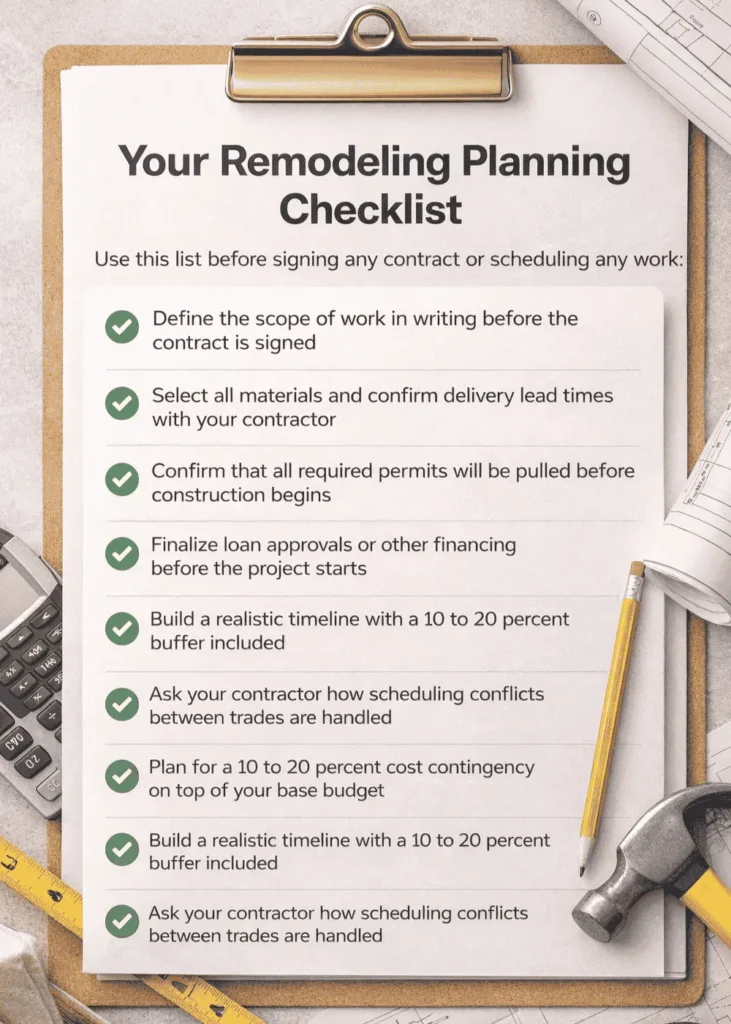
Use this list before signing any contract or scheduling any work:
- Define the scope of work in writing before the contract is signed
- Select all materials and confirm delivery lead times with your contractor
- Confirm that all required permits will be pulled before construction begins
- Finalize loan approvals or other financing before the project starts
- Build a realistic timeline with a 10 to 20 percent buffer included
- Ask your contractor how scheduling conflicts between trades are handled
- Plan for a 10 to 20 percent cost contingency on top of your base budget
This checklist reflects what experienced Bucks County homeowners do before a single wall is touched.
Working With a Local Contractor Who Knows Bucks County
Local experience is not just a selling point. It is a real advantage. A contractor who knows Bucks County permit offices, common issues in pre-1980 homes, and local licensed trades will work faster. They will face fewer surprises than someone learning the area on your project.
VSM Remodeling specializes in bathroom, kitchen, and basement remodeling for homeowners across Bucks County. Estimates are detailed and transparent. Work is code compliant. And planning happens before construction begins, not during it.
The Bottom Line
Delays in home remodeling are common, but most are not inevitable. Permits pulled on time, materials ordered early, selections finalized before work begins, and financing secured in advance are the four habits that separate smooth projects from stressful ones.
Bucks County homes have real and specific considerations that national guides do not cover. Knowing those ahead of time puts you in a much stronger position as a homeowner.
Start with the numbers. Use the Bucks County Remodeling ROI Calculator to understand your return before committing to a scope. Then schedule a consultation with VSM Remodeling to get an accurate estimate, a realistic timeline, and a plan built around your home.