If you have searched phrases like bathroom remodel cost or bathroom renovation cost, you have probably seen numbers that feel all over the place.
One site says a bathroom can cost $8,000. Another says $35,000. Both can be true. The difference comes down to scope, home conditions, and how the work is done.
In Bucks County, bathroom remodeling costs tend to run higher than national averages. Local labor rates, permit requirements, and the age of many homes all play a role.
Older plumbing, outdated electrical systems, and moisture issues are common once walls are opened. These factors affect both cost and timeline.
The goal of this guide is to help you understand realistic bathroom remodel pricing, what drives costs up or down, and how to plan confidently before booking a contractor.
Average Bathroom Remodel Cost in Bucks County, PA
Most Bucks County homeowners should expect bathroom remodel costs to fall into a few broad ranges. These numbers reflect real-world projects rather than best-case scenarios.
An entry-level bathroom refresh often starts around $12,000 to $18,000. These projects typically include new fixtures, updated flooring, a fresh vanity, and paint, while keeping plumbing locations intact.
A mid-range full bathroom remodel commonly falls between $18,000 and $30,000. This level usually includes new tile, upgraded fixtures, a new shower or tub, improved lighting, and proper waterproofing.
A high-end or main bathroom renovation usually starts at $30,000. It can go over $45,000 based on layout changes, tile coverage, custom showers, and material choices.
Bucks County pricing trends higher than national benchmarks due to skilled labor demand and older housing stock.
Average Bathroom Remodel Cost by Bathroom Size
Bathroom size does influence remodel cost, but square footage alone rarely tells the full story. What matters more is how much is packed into the space and how complex the work becomes.
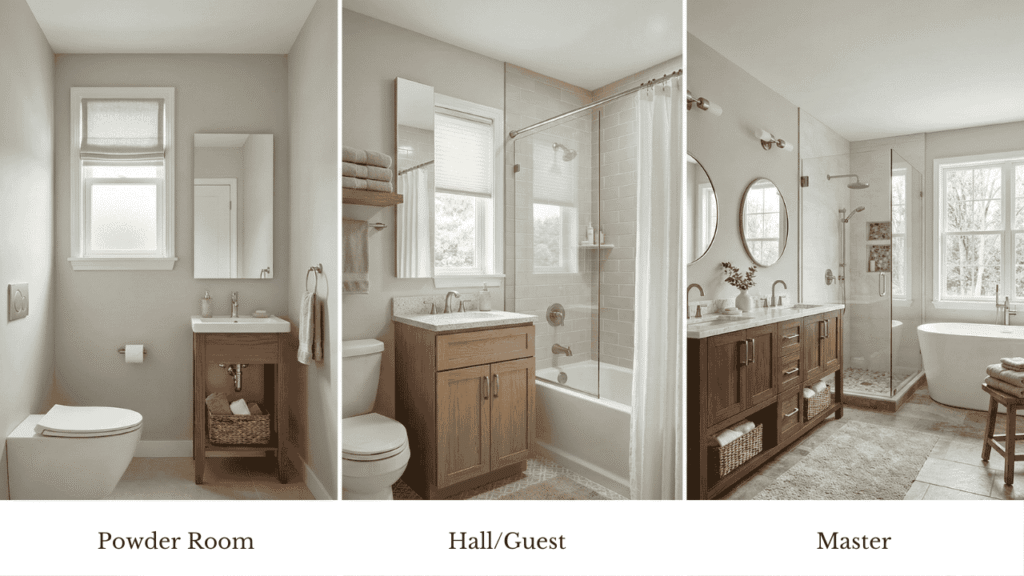
A small bathroom or powder room typically falls between $10,000 and $18,000. The small size of these spaces causes costs to rise quickly. This happens when customers install wall-high tiles, change plumbing systems, or choose premium bathroom fixtures. Tight spaces also need more precision.
A standard hall bathroom often ranges from $15,000 to $28,000. These bathrooms usually include a tub or shower combination, a single vanity, and moderate tile coverage.
Pricing within this range depends heavily on shower design, tile selection, and whether plumbing and electrical systems remain in place.
A 10×10 bathroom remodel cost commonly lands between $22,000 and $35,000. Larger bathrooms require more materials and significantly more labor, especially for waterproofing, tile installation, and ventilation.
Multiple fixtures and expanded shower footprints also add complexity behind the walls.
A primary or master bathroom frequently exceeds $30,000 and can climb higher depending on customization. Double vanities, walk-in showers, curbless showers, and freestanding tubs increase costs. Layered lighting and improved ventilation systems also add to expenses. Both material and labor costs go up with these features.
These bathrooms are often treated as spa-like spaces, which drives design and construction requirements.
In most cases, the size of the bathroom sets the starting point for material amounts. However, plumbing changes, fixture quality, and design complexity decide where a project falls within these ranges.
Cost Breakdown by Bathroom Components
Bathroom remodel pricing becomes clearer when broken into components. Most budgets include some combination of the following.
Demolition and Prep Work
This phase often reveals hidden issues such as water damage, mold, or improper framing from past renovations. Proper prep work protects the new installation and prevents expensive failures later.
Plumbing Fixtures and Rough-ins
Costs increase when plumbing must be relocated or brought up to current code standards. Older Bucks County homes often require pipe replacement before new fixtures can be safely installed.
Shower or Tub Installation Costs
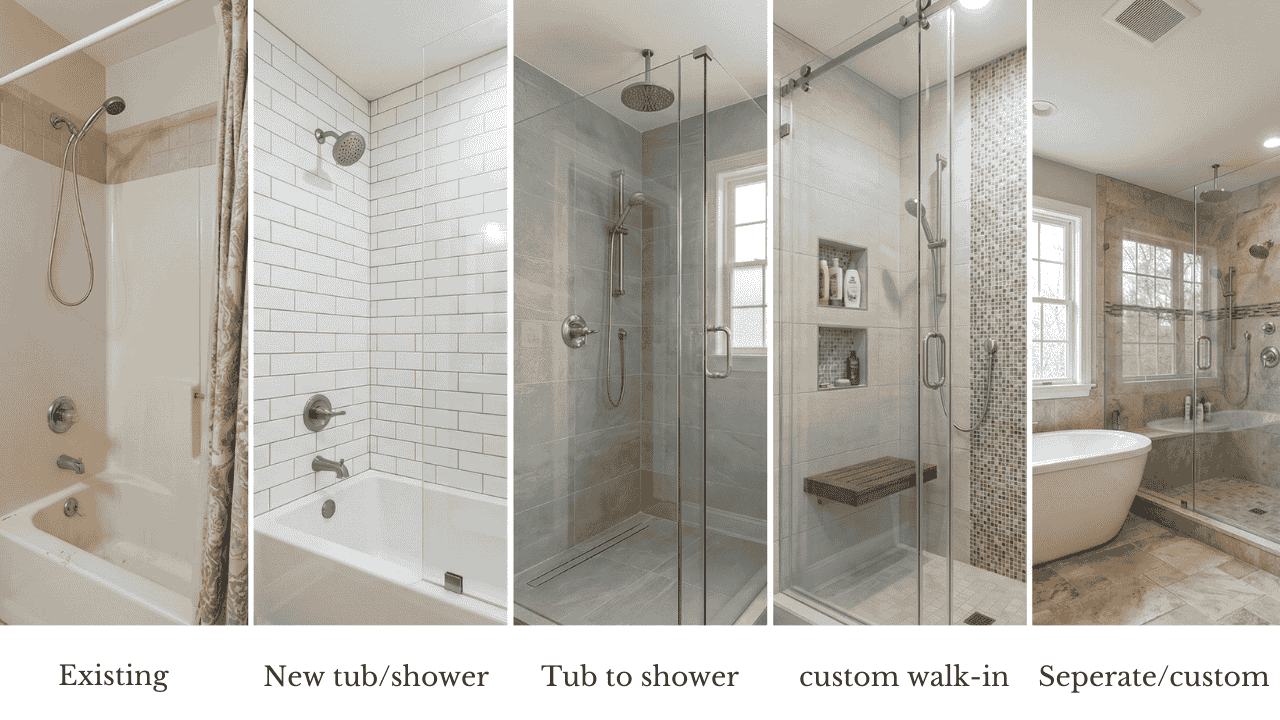
These vary widely by design. Prefabricated units are faster and less expensive, while custom showers require framing, waterproofing, and precise installation. Drain placement and curb or curb-less designs also affect labor and materials.
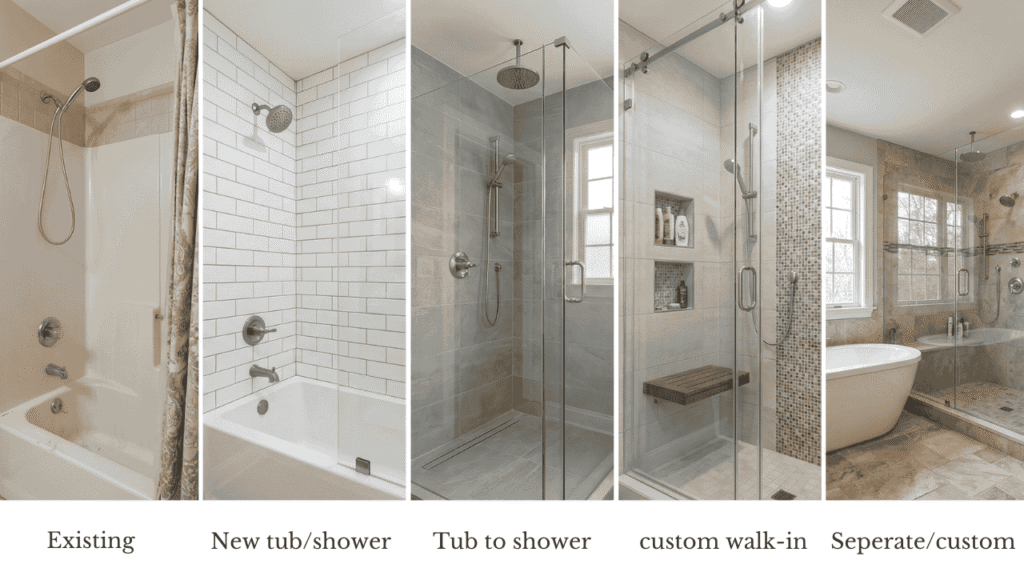
Tile and Waterproofing
One of the most labor-intensive phases. Tile costs depend more on layout complexity, tile size, and pattern than on square footage. Waterproofing systems are important for durability. They must be installed correctly to avoid leaks in the future.
Vanities, Countertops, and Storage
They can come in stock or custom options. Stock vanities are cheaper but offer less flexibility. Custom cabinets provide more storage and design choices. Countertop material selection also impacts both price and installation time.
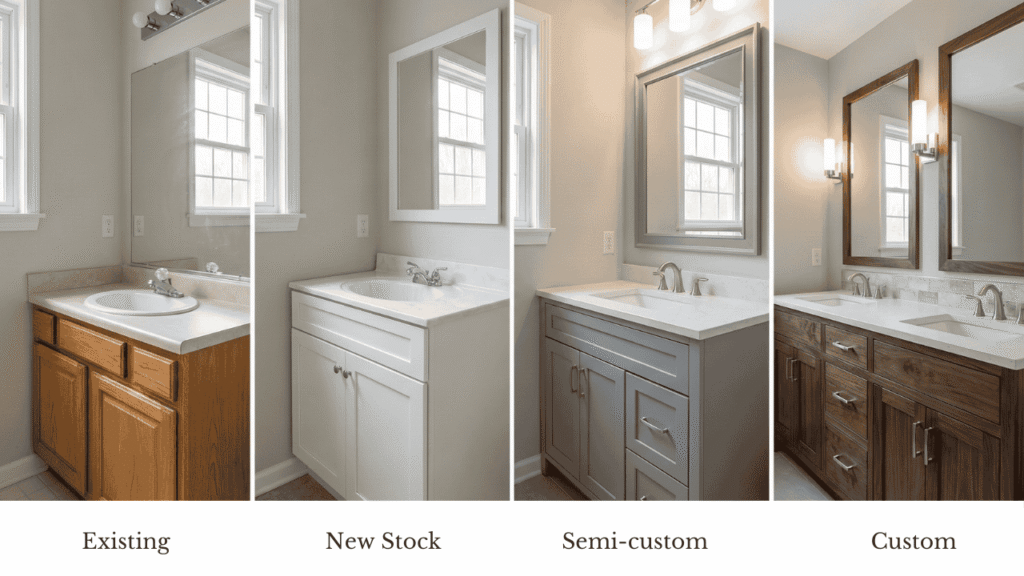
Lighting, Ventilation, and Electrical
Bathrooms must meet strict safety requirements, including GFCI protection and proper ventilation. Upgrading lighting layouts or adding exhaust fans often requires electrical modifications behind the walls.
Flooring and trim, which must withstand moisture.
Bathrooms require water-resistant flooring materials and properly sealed trim. Subfloor repairs are common once old flooring is removed and can add to the total project cost.
Moving plumbing locations is one of the fastest ways to increase cost. Drain relocation, venting changes, and structural access all add labor hours.
Key Factors Influencing Bathroom Remodel Costs
Bathroom remodel costs rise or fall based on a combination of conditions, not just material choices.
Layout and size determine how much labor is involved. Material selections affect both supply cost and installation time. Older homes often introduce surprises behind the walls, such as undersized wiring.
Waterproofing and ventilation are critical in bathrooms and must meet current standards. Skipping these steps leads to long-term damage and failed inspections.
Permits also play a role. In Pennsylvania, most bathroom remodels involving plumbing, electrical, or structural work require permits and inspections.
Labor and Professional Service Expenses
Labor is the largest portion of most bathroom remodel budgets. In many cases, labor accounts for 40 to 65 percent of the total cost.
Bathrooms require multiple licensed professionals. A general contractor coordinates the project. Plumbers handle water and drainage. Electricians manage lighting and ventilation. Tile installers ensure proper waterproofing.
Licensed labor matters in Bucks County because officials enforce inspections. DIY bathroom projects often fail due to waterproofing mistakes or improper venting.
Types of Bathroom Remodel Projects
Mot all bathroom remodels involve the same level of work, cost, or disruption. Understanding the type of project you’re planning helps set realistic expectations for budget, timeline, and permitting.
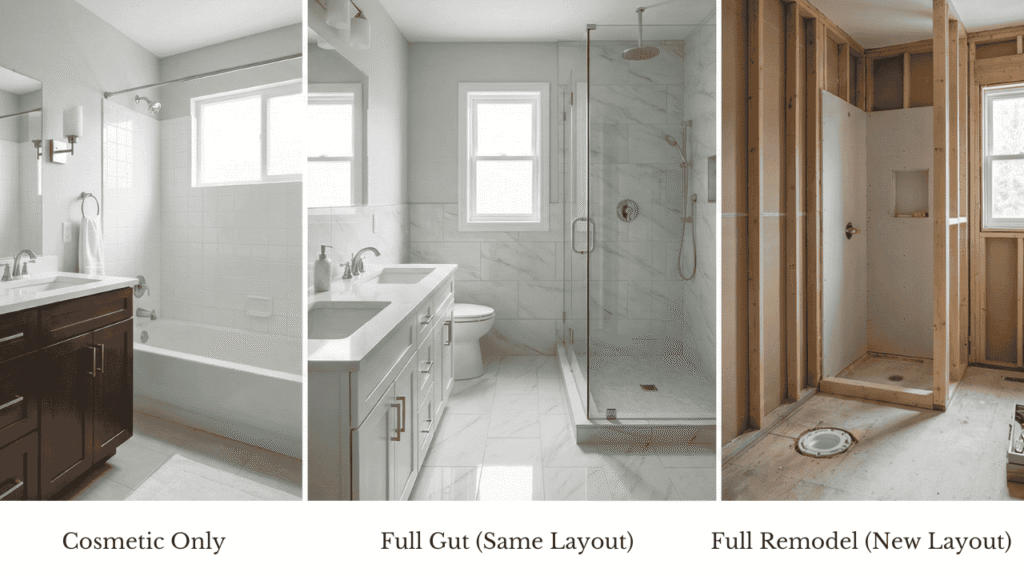
Cosmetic refresh projects focus on surface-level improvements without changing layout or systems. These typically include new paint, updated fixtures, a vanity swap, or replacing mirrors and accessories. Cosmetic updates are best suited for bathrooms in good structural condition and are usually the lowest-cost option.
Partial renovation projects replace finishes and fixtures while keeping the existing layout. This may include a new tub or shower, tile replacement, vanity upgrades, and updated lighting. While the footprint stays the same, workers often touch plumbing connections, which increases labor and may trigger permit requirements.
Full bathroom remodels involve opening walls and upgrading systems. These projects commonly include new plumbing lines, electrical updates, ventilation improvements, and full waterproofing. Full remodels are recommended for older Bucks County homes where systems no longer meet current safety or performance standards.
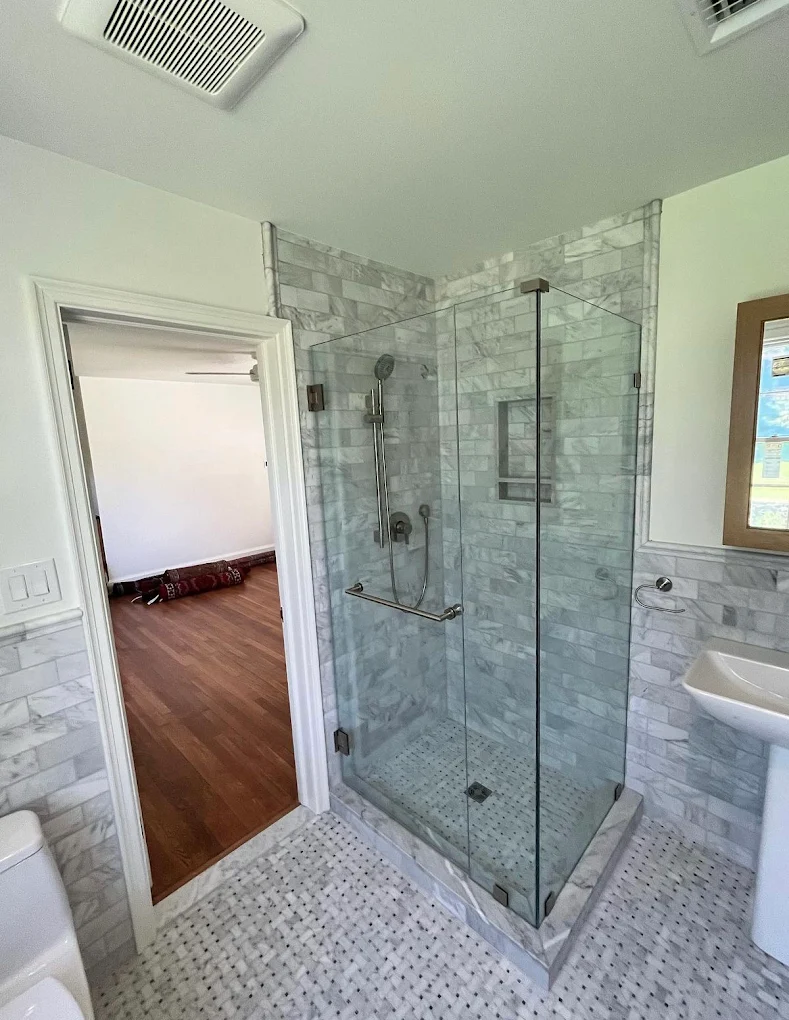
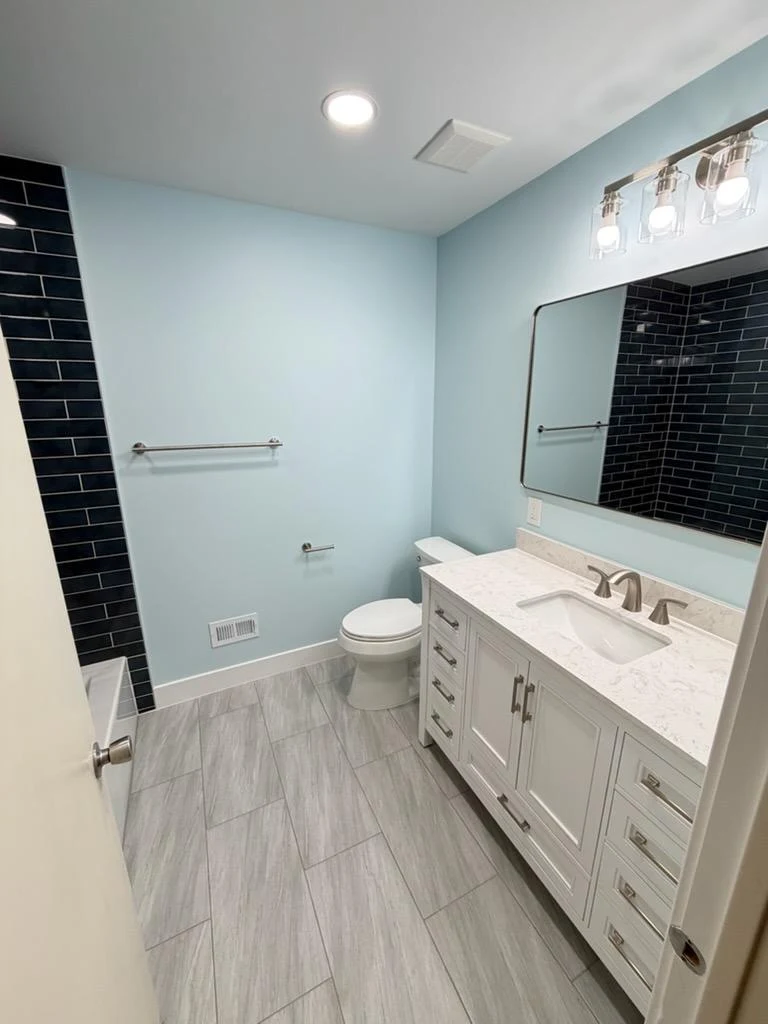
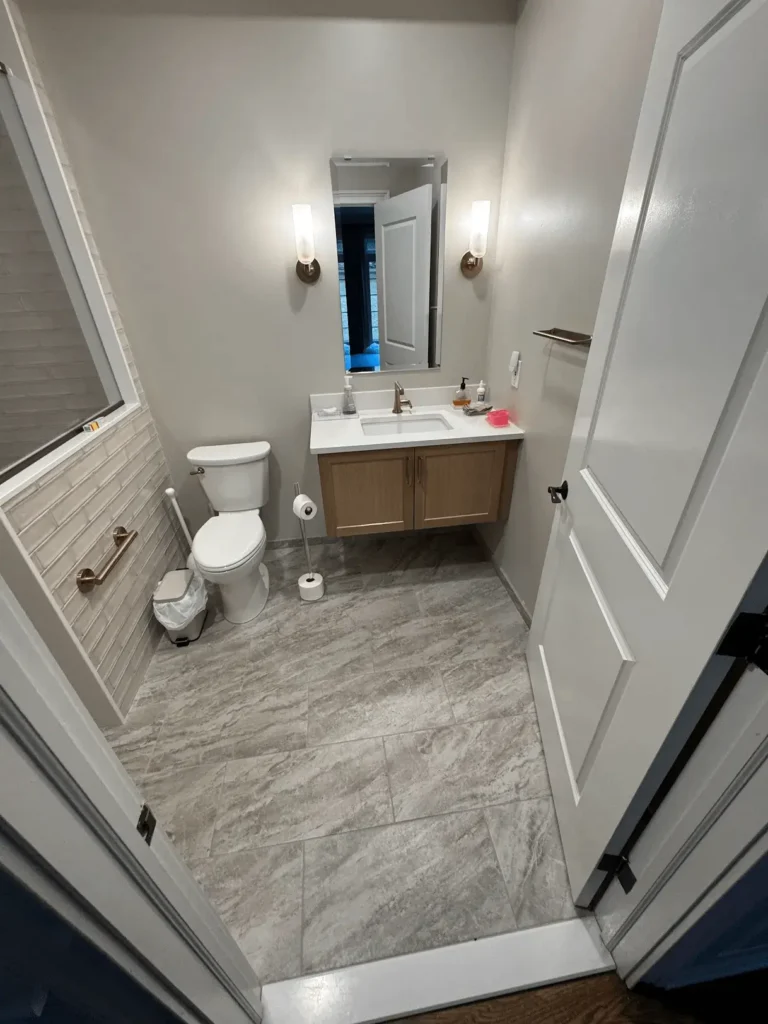
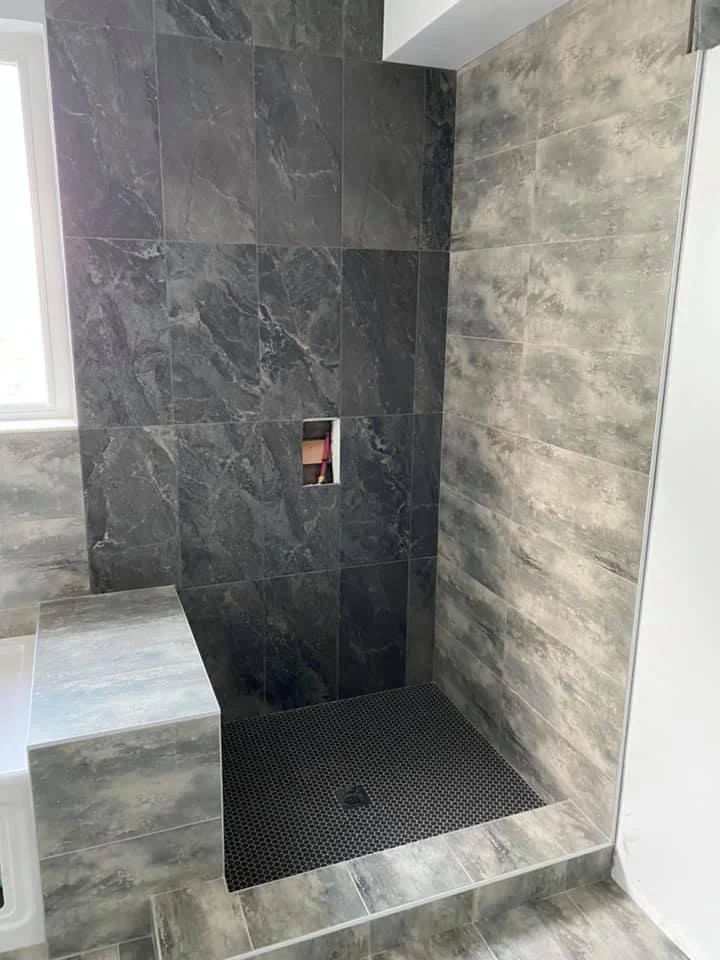
Layout reconfiguration projects change how the bathroom functions. Moving walls, relocating toilets or showers, or expanding the space significantly increases complexity and cost. These remodels require careful planning, engineering review in some cases, and multiple inspections to ensure code compliance.
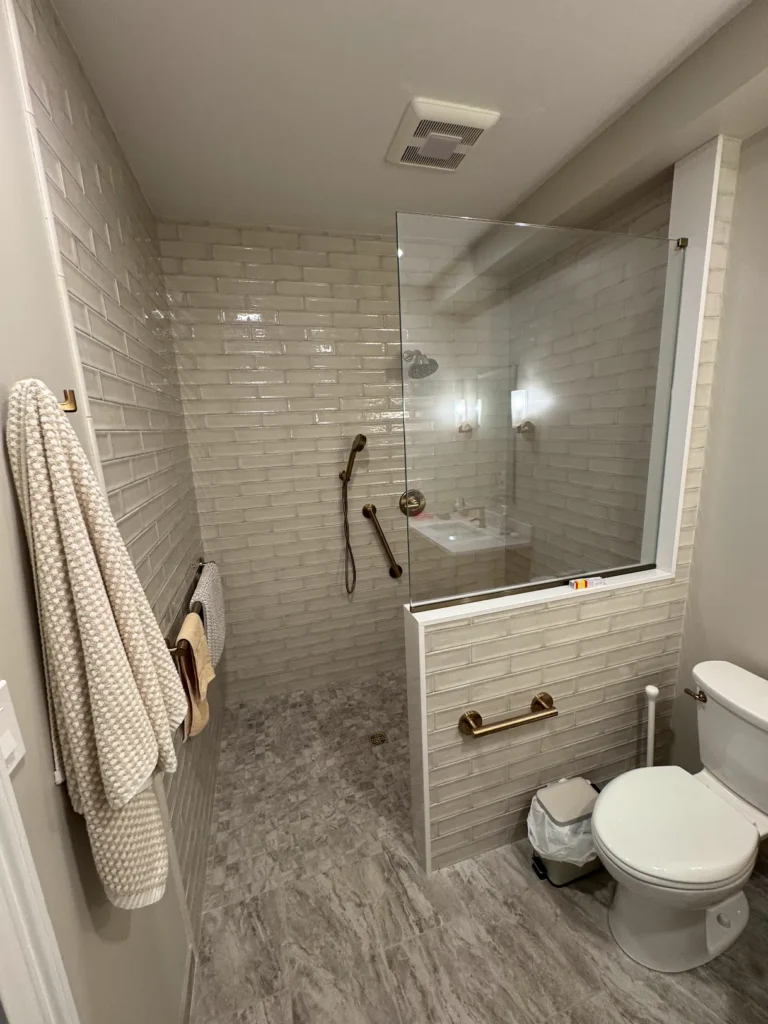
Accessibility and aging-in-place upgrades prioritize safety and long-term usability. Common features include curbless showers, wider doorways, grab bars, and comfort-height fixtures. These upgrades often overlap with full remodels and must meet specific code and clearance requirements.
Tub to Shower Conversion Cost in Bucks County
The cost of converting a tub to a shower is a popular bathroom upgrade. It greatly improves usability and looks modern. In Bucks County, most conversions cost between $8,000 and $18,000. However, the final price depends on design choices and the current conditions.
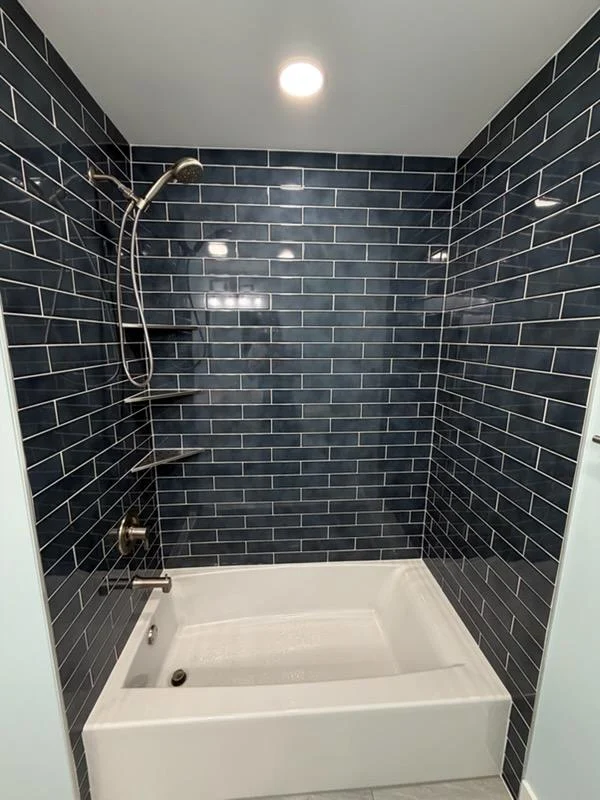
Prefabricated shower replacements are faster and more budget-friendly, making them a popular option for secondary bathrooms. Custom tiled showers require additional framing, waterproofing, and skilled tile installation, which increases both labor time and cost.
Older homes may require plumbing upgrades before a conversion can be completed safely. While accessibility features raise the upfront investment, they often prevent costly future renovations.
Use our free bathroom remodel cost calculator in Bucks County to get an accurate estimate.
Permits, Codes, and Legal Considerations in Bucks County
Permits exist to protect homeowners, not slow projects down. In Pennsylvania, bathroom remodels that involve plumbing, electrical, ventilation, or structural changes fall under the Uniform Construction Code (UCC).
These requirements ensure that work meets current safety standards and is inspected by qualified officials.
Inspections help catch issues that are not always visible once walls are closed, such as improper wiring, inadequate ventilation, or incorrect plumbing slopes.
Skipping permits may save time upfront, but unpermitted work often creates serious problems during resale, refinancing, or insurance claims. Many buyers and appraisers flag unpermitted bathrooms as liabilities, which can delay or derail a sale.
Local enforcement and guidance are available through Philadelphia-area and Bucks County building departments. While requirements vary by township, most municipalities follow similar inspection processes and documentation standards. Homeowners can review general permitting guidance here.
How to Budget for a Bathroom Remodel Without Regret
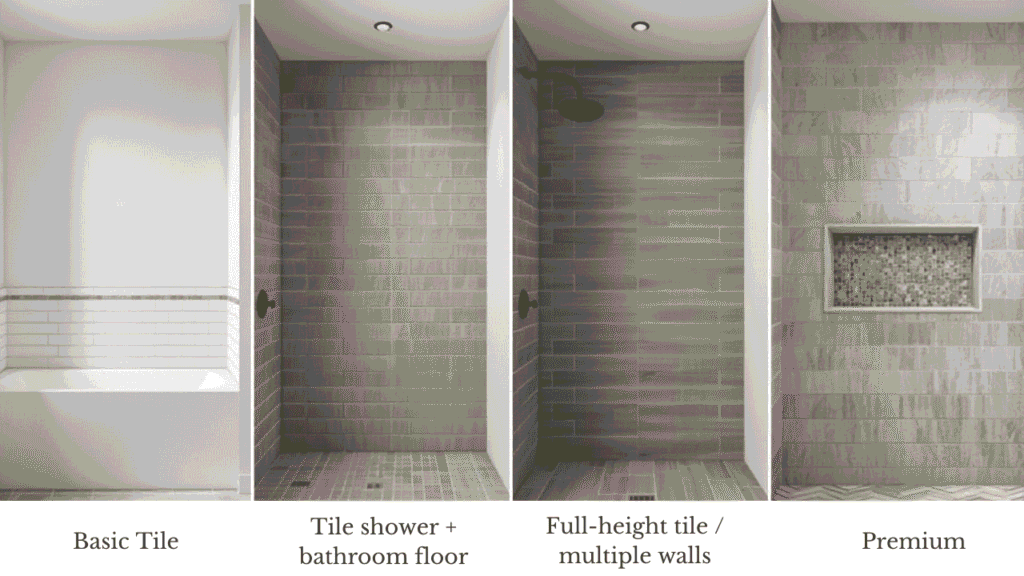
The best remodeling budgets start with a realistic range instead of a single fixed number. Bathroom remodel costs almost always evolve once demolition begins, especially in older Bucks County homes. Including a 10 to 20 percent contingency helps absorb surprises without derailing the project.
Durability should always come before trends. Bathrooms are high-moisture environments, and materials that look great but perform poorly often lead to repairs sooner than expected. Investing in proper waterproofing, ventilation, and quality installation protects the long-term value of the remodel.
Choosing the right contractor is equally important. Reviewing scope details, allowances, and assumptions upfront prevents misunderstandings later.
Using a Bathroom Remodel Cost Estimator is a smart early step. It helps narrow expectations, compare scenarios, and prepare better questions before scheduling consultations.
Why Bucks County Homeowners Choose VSM Remodeling
Homeowners choose VSM Remodeling because we know homes, codes, and local permits. We focus on bathrooms, kitchens, and basements.
Our estimates are clear and easy to understand. Our work meets all codes. We plan carefully before starting construction to avoid surprises later.
We also provide a Bathroom Remodel Cost Calculator to help homeowners plan intelligently before committing. It’s one more way we help clients make informed decisions with confidence, not pressure.
If you are planning a bathroom remodel in Bucks County, the next step is clarity. A consultation helps you understand what your space realistically requires.