Table of Contents
If you are planning a remodel in Bucks County, one of the first questions you need to answer is whether your project requires a permit. It is also one of the most misunderstood parts of the process.
Skipping a permit can cost you far more than pulling one ever would. Pennsylvania’s Uniform Construction Code (PA UCC), administered by the PA Department of Labor and Industry, sets the statewide baseline for residential construction permits. How that gets enforced depends on your local municipality.
This guide breaks down what requires a permit for kitchen, bathroom, and basement remodels in Bucks County so you can move forward with confidence. At VSM Remodeling, we handle the permit process for every project we take on.
Why Permits Are There to Protect You
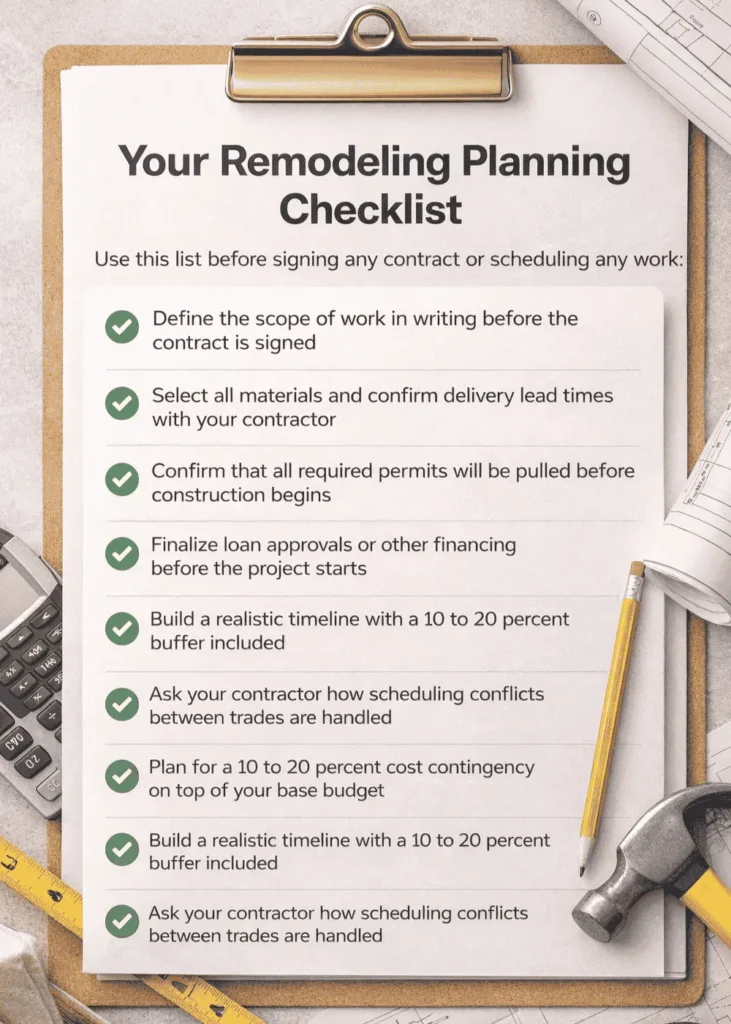
A building permit is an official approval from your local municipality confirming that your planned work meets safety and building codes. That is it. It is not red tape for its own sake.
Permits protect you as the homeowner by ensuring work is inspected and code compliant before it is finished and covered up inside your walls.
In Pennsylvania, municipalities enforce the UCC at the local level. In Bucks County, that means your specific township or borough handles permits, not the county itself.
With more than 50 municipalities across Bucks County, requirements can vary from one town to the next. Working with a licensed contractor who knows the local process is the most reliable way to stay protected.
Kitchen Remodel Permits in Bucks County
What Types of Kitchen Remodeling Projects Require a Permit?
Not every kitchen update triggers a permit requirement. Cosmetic work generally does not. But once your project involves the systems behind the walls, permits are typically required.
Work that usually requires a permit:
- Moving or adding electrical circuits (new outlets, under cabinet lighting on a new circuit)
- Plumbing changes (relocating your sink, adding a dishwasher line, gas line work)
- Structural changes (removing or modifying walls, widening doorways)
- HVAC modifications (range hood venting, ductwork changes)
Work that generally does not require a permit:
- Cabinet refacing or replacement (no structural change)
- Countertop replacement
- Painting, flooring, and tile work
Pennsylvania adopted the International Residential Code (IRC) as part of the UCC, and electrical work is further governed by the National Electrical Code (NEC). When in doubt, confirm with your local township before starting any work.
A Quick Permit Checklist for Your Kitchen Remodel
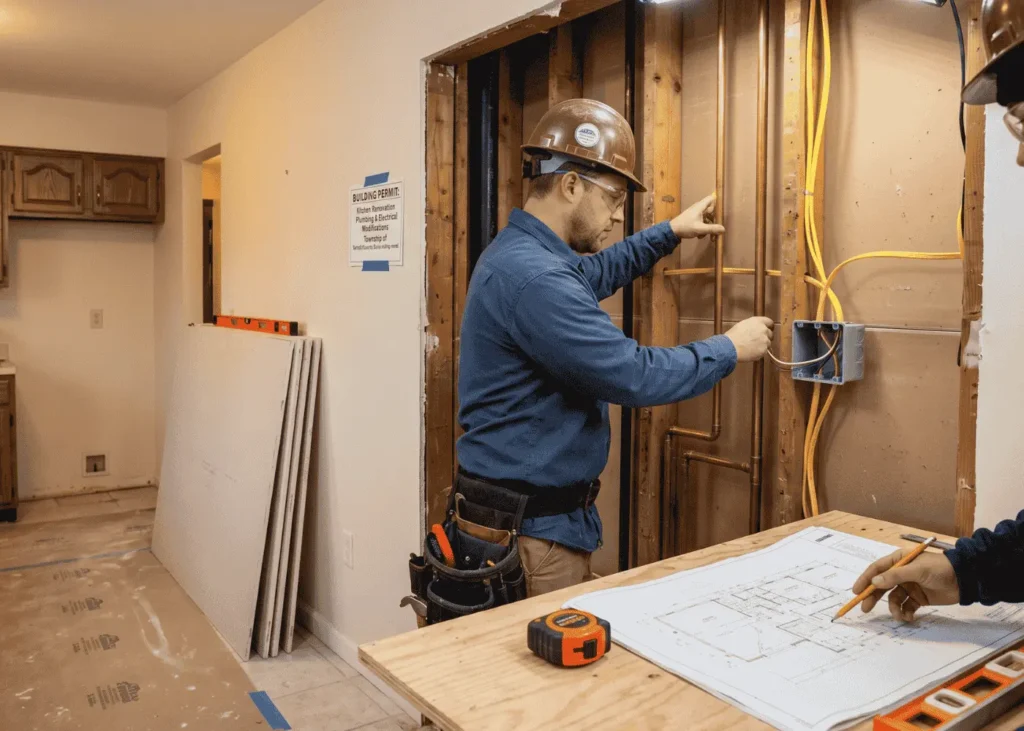
Run through these questions before your project begins:
- Are you moving or adding plumbing?
- Are you adding or relocating electrical circuits?
- Are you removing or altering any walls?
- Are you changing your HVAC or ventilation setup?
- Are you adding a gas appliance or new gas line?
If you answered yes to any of the above, your project likely requires a permit. At VSM Remodeling, we handle this step on your behalf for every kitchen remodeling project we complete in Bucks County.
How to Obtain a Permit for Your Kitchen Remodel in Bucks County
The permit process in Bucks County is handled at the township level, not the county level. Here is what the process typically looks like:
- Identify your municipality’s building department (Newtown Township, Doylestown Borough, etc.)
- Submit project plans and a scope of work
- Pay the permit fee, which varies by scope and municipality
- Receive approval before permitted work begins
- Schedule inspections at required project milestones
Approval typically takes one to four weeks depending on the township. A licensed contractor should pull the permit on your behalf, submit the plans, and coordinate all required inspections.
If your contractor skips this conversation entirely, that is worth paying attention to.
Bathroom Remodel Permits in Bucks County
What Types of Bathroom Remodeling Projects Require a Permit?
The same principle applies here. Cosmetic updates in the same location usually do not require a permit. Work that involves moving systems or expanding scope typically does.
Work that usually requires a permit:
- Relocating a toilet, shower, or sink
- Adding electrical circuits, GFCI outlets, exhaust fans, or heated floors
- Structural changes such as moving walls or expanding the bathroom footprint
- Converting a half bath to a full bath
Work that generally does not require a permit:
- Swapping fixtures in the same location (toilet, vanity, faucet)
- Tile work, painting, and mirror replacement
- Shower surround replacement with no plumbing relocation
If your scope goes beyond cosmetic updates, confirm requirements with your local building department before work begins.
A Quick Permit Checklist for Your Bathroom Remodel
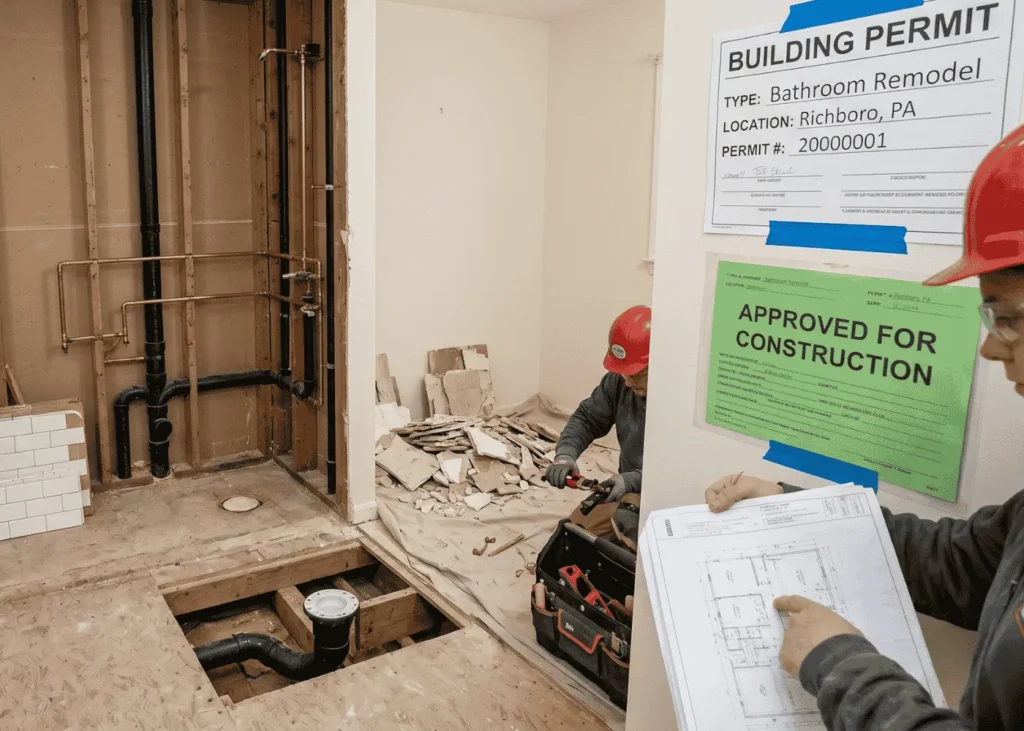
- Are you moving the toilet, shower, or sink to a new location?
- Are you adding a bathroom where one does not currently exist?
- Are you adding new electrical circuits or lighting?
- Are you making structural changes to walls or the floor plan?
- Are you adding or expanding a ventilation system?
One or more yes answers means permits are likely required. Your contractor should bring this up without being prompted. If they do not, that is a concern worth taking seriously.
How to Obtain a Permit for Your Bathroom Remodel
The process mirrors the kitchen permit process. Your contractor contacts your local building department, submits plans and scope of work, pays the applicable fee, and awaits approval before work begins. Inspections are scheduled as the project progresses.
Bathroom permits are routine. With the right contractor, the process should not slow your project down in any meaningful way.
At VSM Remodeling, we manage permit applications on behalf of every homeowner so you are not navigating township offices on your own.
Planning a bathroom remodel in Bucks County? VSM Remodeling handles the permits, the process, and every detail from start to finish. Get a free quote today.
Basement Finishing Permits in Bucks County
What Types of Basement Remodeling Projects Require a Permit?
Finishing a basement is one of the projects homeowners most commonly attempt without a permit. It is also one of the riskiest decisions you can make.
Work that almost always requires a permit:
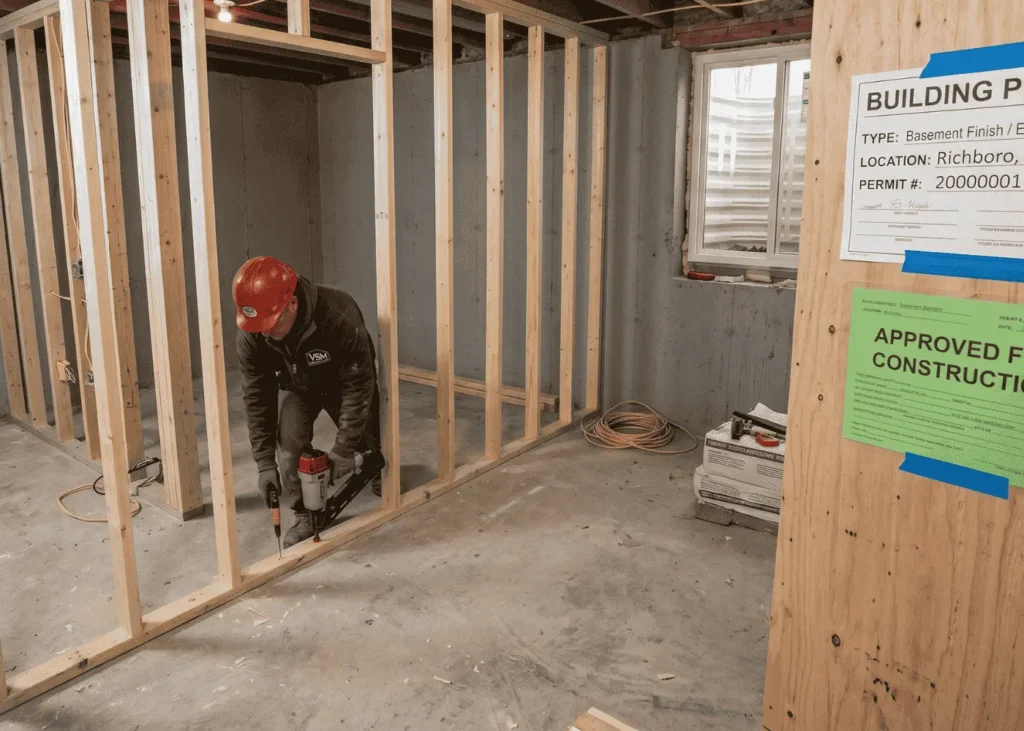
- Framing new partition walls
- Adding or upgrading electrical (outlets, lighting, new circuits)
- Adding a bathroom, wet bar, or any plumbing
- Extending HVAC into the basement
- Installing egress windows
- Adding a bedroom or sleeping area
IRC Section R310 establishes egress requirements for sleeping rooms. Any basement bedroom must meet minimum window size, ceiling height, and smoke detector standards. These are not optional provisions. They are safety requirements.
Work that may not require a permit in some municipalities:
- Painting existing concrete or block walls
- Installing a drop ceiling over existing finishes (confirm locally)
The moment a basement transitions into livable space, it falls under stricter scrutiny. That scrutiny exists for good reason.
A Quick Permit Checklist for Your Basement Remodel
- Are you framing new partition walls?
- Are you adding or upgrading electrical?
- Are you adding a bathroom or any plumbing?
- Are you extending HVAC into the space?
- Are you creating a bedroom or sleeping area?
- Are you cutting in new egress windows?
If you are finishing a basement in any meaningful way, assume a permit is required. Any contractor who suggests otherwise should give you pause.
How to Obtain a Permit for Your Basement Remodel
The process is the same as any other permitted project in Bucks County. Contact your local building department, submit your plans, pay the applicable fee, and schedule inspections as work progresses.
For basement finishing projects, inspections typically occur at several stages: framing, electrical rough-in, insulation, and final completion.
VSM coordinates every inspection so you do not have to manage the schedule yourself.
A permitted, inspected basement adds verified value to your home. The Bucks County Assessment Office uses completed permit records as part of how improvements are assessed.
A finished basement with proper documentation is an asset. An unpermitted one can become a liability at the time of sale.
To learn more about what goes into a finished basement, visit our basement remodeling page.
The Real Cost of Skipping a Permit
Many homeowners wonder if they can skip the permit process to save time or money. Here is what actually happens when unpermitted work is discovered.
Your township can issue a stop-work order, levy fines, and in some cases require that finished work be torn out and redone to pass inspection.
When you sell your home, Pennsylvania’s Real Estate Seller Disclosure Law (Act 114 of 2000) requires that you disclose known material defects to buyers. Unpermitted work qualifies.
Lenders and appraisers can flag unpermitted additions, which can affect your home’s appraised value and your buyer’s ability to secure financing. Your homeowner’s insurance may not cover damage that originates from unpermitted work.
The short-term savings rarely hold up against those risks.
Working With a Licensed Contractor in Bucks County
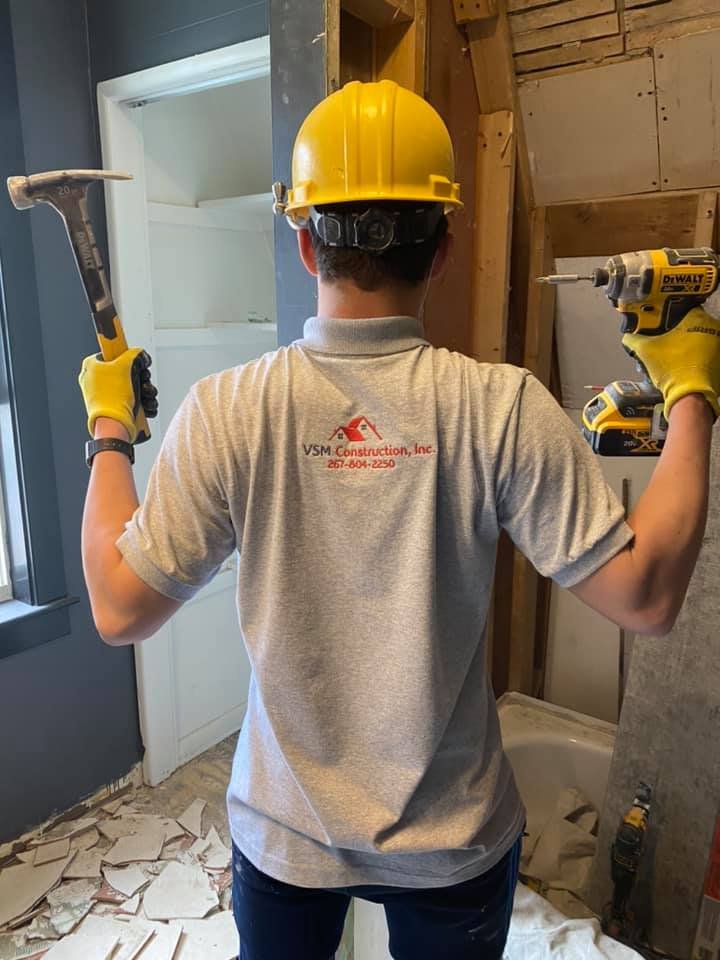
What separates contractors is experience and local knowledge. VSM Remodeling is licensed, insured, and has completed projects across Bucks County including Richboro, Newtown, Doylestown, and Huntingdon Valley.
We know how each township’s building department operates, and that knowledge helps keep your project on schedule. We pull permits, submit plans, coordinate all inspections, and address any code concerns before work begins.
You should not have to figure any of this out on your own.
VSM Remodeling manages every permit and inspection for kitchen, bathroom, and basement projects across Bucks County. Schedule your free consultation today.
Frequently Asked Questions About Remodeling Permits in Bucks County
Do I need a permit to remodel my kitchen in Bucks County? It depends on the scope. Cosmetic updates typically do not require one. Work involving plumbing, electrical, structural changes, or HVAC usually does. Use the checklist above to gauge where your project falls.
Who pulls the permit — the homeowner or the contractor? Either party can apply, but a licensed contractor typically handles it. At VSM, we pull permits on behalf of every client.
How long does it take to get a remodeling permit in Bucks County? It varies by municipality. Most approvals come through within one to four weeks for standard residential projects.
Will unpermitted work affect my home sale? Yes. Pennsylvania law requires sellers to disclose known material defects, and unpermitted work falls into that category.