You did the research. You saved the Pinterest boards. You watched enough renovation shows to feel confident walking into a showroom.
Then you stood in front of forty tile samples and completely froze. It happens to almost every homeowner we meet.
Choosing remodeling materials is not just about what looks good on a mood board. The right materials affect how long your space holds up, how much time you spend cleaning it, and what your home is worth years from now.
Whether you are planning a bathroom remodel in Newtown or finishing a basement in Doylestown, figuring out the best materials for home remodeling is difficult.
This guide cuts through the noise. We will match real material options to how Bucks County families actually live.
Why Material Selection Is One of the Most Important Decisions in Any Remodel
Most homeowners focus on design first and materials second. But materials should come first.
According to the National Association of Home Builders, materials account for roughly 40 to 60 percent of total project cost.
That means a poor material decision does not just hurt the look of a space. It can cost you thousands in early repairs, replacements, and lost home value.
Pennsylvania’s climate adds another layer of complexity. Bucks County has clear seasonal changes: humid summers, cold winters, and freeze-thaw cycles.
Over time, these changes can stress flooring, tile, and cabinetry.
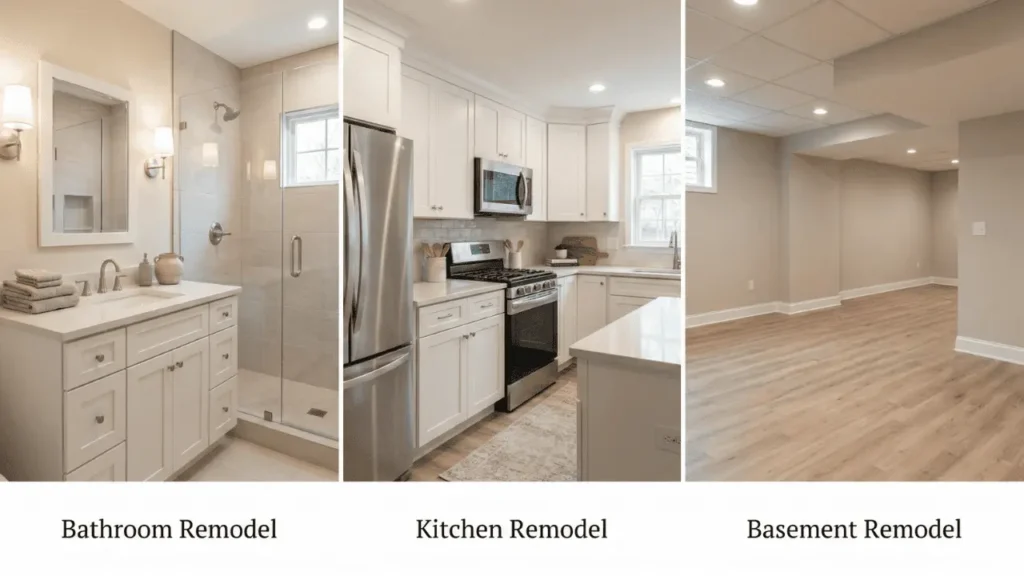
At VSM Remodeling, we handle three types of projects where this matters most: kitchen remodeling, bathroom remodeling, and basement finishing. Each one has its own material demands. Let us break it down.
How to Choose Materials for a Kitchen Remodel
The kitchen takes more daily wear than any other room in your home. Materials here need to perform, not just impress.
Countertops: Balancing Beauty and Durability
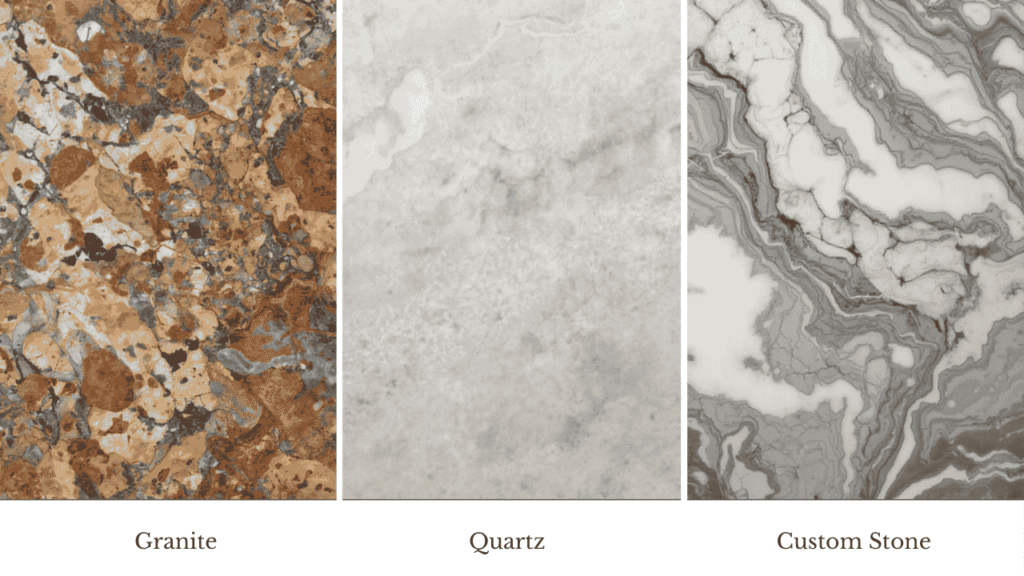
Quartz, granite, and laminate are the three most common countertop choices. Here is what each one actually means for your home.
Quartz
Quartz is non porous, requires no sealing, and holds up beautifully in busy kitchens. If you have young kids or cook daily, quartz is the most practical long term investment. It resists stains, scratches, and moisture without ongoing maintenance.
Granite
Granite offers a premium natural look, but it requires annual sealing to prevent staining. The Marble Institute of America provides care standards for natural stone, and proper sealing is essential for longevity. If you are committed to maintenance, granite delivers stunning results.
Laminate
Laminate has improved significantly in recent years. It is budget friendly and comes in a wide range of styles. However, it is not ideal for areas near high heat or heavy daily use.
For most Bucks County families, quartz is the most popular and practical choice. This is especially true in Newtown and Doylestown, where kitchens get heavy use.
Cabinet Materials: What Actually Holds Up
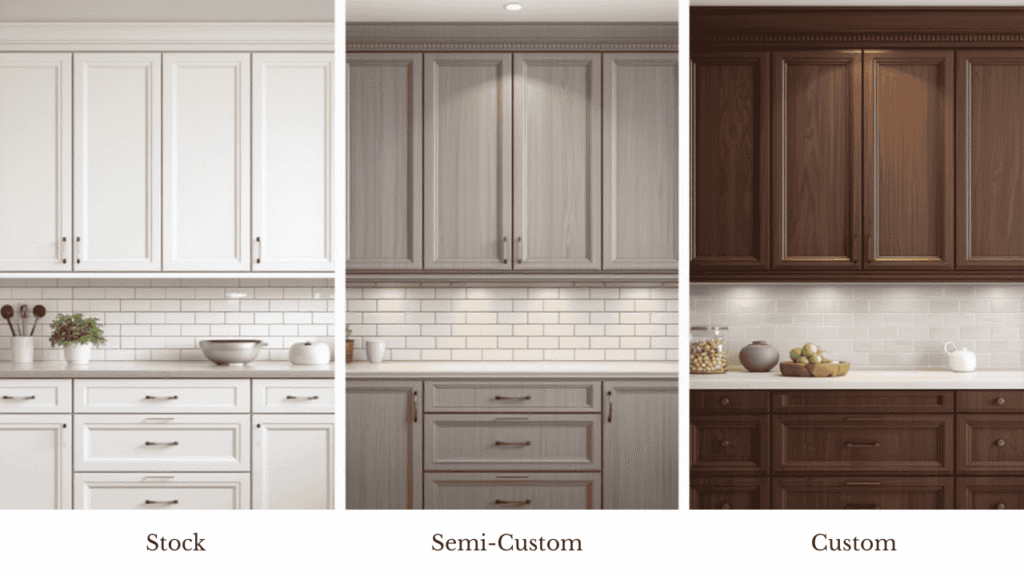
Not all cabinets are built the same. The box construction matters as much as the door style.
Plywood core cabinets
Plywood core cabinets outperform MDF and particleboard in humid environments. They resist warping and hold screws better over time. The Kitchen Cabinet Manufacturers Association sets performance standards for cabinetry, and plywood core construction consistently meets the highest durability ratings.
MDF
MDF (medium density fiberboard) is more affordable but swells and warps when exposed to moisture. Avoid it near sinks or in bathrooms. Particleboard is the weakest option and is not recommended for long term kitchen installs.
If you have young children, also look for soft close hardware and scratch resistant finishes. They hold up better and make daily life quieter.
Flooring in the Kitchen
Three materials dominate kitchen flooring: luxury vinyl plank, porcelain tile, and hardwood.
Luxury vinyl plank (LVP)
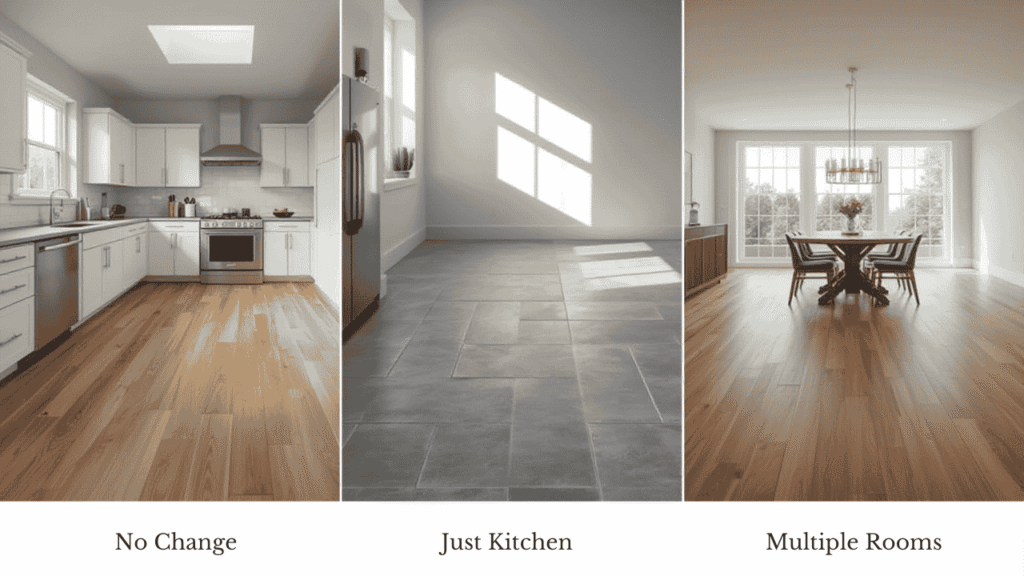
Luxury vinyl plank is the top choice for families with kids or pets. It is fully waterproof, scratch resistant, comfortable underfoot, and easy to clean. In older Bucks County homes where subfloor conditions vary, LVP also installs more forgivingly than tile or hardwood.
Porcelain tile
Porcelain tile is extremely durable and easy to wipe down, but it is cold underfoot and hard on your joints if you stand for long periods. Comfort mats help, but it is worth considering.
Hardwood
Hardwood is beautiful, but it is vulnerable to moisture. Near sinks and dishwashers, hardwood floors are a risk. For most kitchens, LVP gives you the warmth and style of wood without the downside.
How to Choose Materials for a Bathroom Remodel
A bathroom remodel is one of the best investments you can make in a Bucks County home. But the wrong materials can turn a dream space into a maintenance headache fast.
Tile: Walls, Floors, and Showers
Porcelain tile
Porcelain tile is the gold standard for bathroom floors and shower surrounds. Harder and denser than ceramic, it absorbs minimal water and stands up to daily moisture without issue. The Tile Council of North America sets installation standards for tile work, and porcelain meets the highest ratings for wet areas.
Ceramic tile
Ceramic tile is a strong choice for walls and backsplashes. It is more affordable than porcelain but softer, which makes it less ideal for floors.
Natural stone
Natural stone (marble, slate, travertine) is stunning, but it requires sealing and careful ongoing maintenance. If that is not part of your routine, the look fades quickly and stains become a problem.
For families with kids sharing one bathroom, matte finish porcelain on the floor is a smart call. It hides water marks and provides better slip resistance than polished surfaces.
One important note: shower and tub surround work in Pennsylvania may require permits depending on the scope of the project. The PA Department of Labor and Industry Construction Code Program oversees these requirements. At VSM Remodeling, we handle all permitting on your behalf. You never have to chase paperwork.
Vanity and Countertop Materials
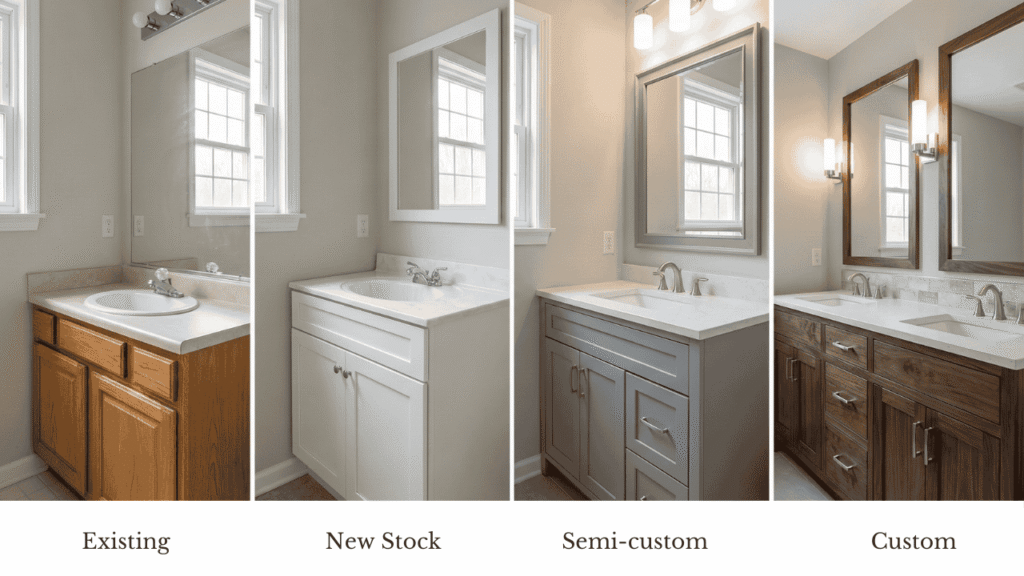
Quartz
Quartz is the right call for bathroom vanities. Non porous, it resists mold and mildew without any special treatment. That matters in a room that sees steam and moisture every single day.
Cultured marble
Cultured marble is a more affordable option with solid moisture resistance, though the design range is more limited.
Wood vanity tops
Wood vanity tops can look beautiful but require careful sealing and upkeep. In high humidity bathrooms, they tend to warp or stain over time.
Shower and Tub Surrounds
Acrylic panels
Acrylic panels offer a seamless, grout free installation. They are faster to install, easier to clean, and more budget friendly. For full bathroom remodels where timeline and budget matter, acrylic is a strong option.
Tile surrounds
Tile surrounds take longer to install and require regular grout cleaning, but they deliver a premium, custom look. If you want that spa feel — large format tile, a linear drain, floor to ceiling coverage — properly installed tile is worth it.
How to Choose Basement Flooring and Finish Materials
A finished basement adds real living space and real value. But it requires a different approach to materials than any other room in your home.
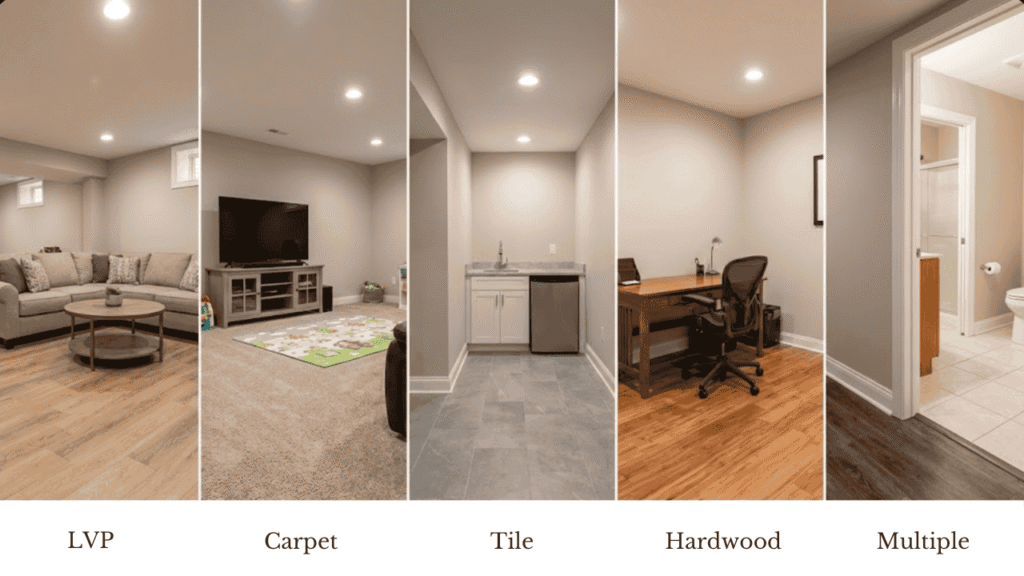
Flooring Options for Below Grade Spaces
Moisture is the biggest threat to any basement finish. Before you choose a floor, you need to address any water intrusion. The EPA’s guide on moisture control in buildings makes clear that managing moisture is the foundation of any healthy indoor space.
LVP
LVP is the top choice for finished basements. It is fully waterproof, comfortable underfoot, and installs over slightly uneven subfloors. This is common in older Bucks County homes. It also comes in styles that look and feel like real wood without the moisture risk.
Engineered hardwood
Engineered hardwood performs better than solid wood below grade, but it is still moisture sensitive and is not our first recommendation for basements.
Epoxy and polished concrete
Epoxy and polished concrete are excellent for workshop or utility areas, but they are too cold and hard for family rooms or guest spaces.
Carpet tiles
Carpet tiles are a practical choice for kids’ playrooms. Individual tiles can be replaced if one gets stained or damaged, which keeps long term costs low.
Wall and Ceiling Materials in Basements
Moisture resistant drywall is essential in below grade spaces. Standard drywall is not appropriate. Type X or green board drywall is the right product for basement walls in Pennsylvania.
For ceilings, the choice comes down to access versus aesthetics. Drop ceilings allow easy access to plumbing and HVAC. Drywall ceilings look cleaner but require opening up the ceiling for any future repairs.
Finished basements in Bucks County also typically require building permits through your local township. Requirements vary by municipality.
The Bucks County Planning Commission and your local township building department (such as Northampton Township) are the right starting points. VSM Remodeling handles all permit coordination for our clients.
Matching Materials to Your Lifestyle: A Simple Decision Framework
Before you commit to any material, ask yourself four questions.
How much traffic does this space get? High traffic rooms need harder, more durable surfaces. A guest bathroom has different needs than a shared family bathroom used by three kids every morning.
Do you have kids or pets? Prioritize scratch resistance, slip resistance, and surfaces that clean easily. This usually points you toward LVP for floors and quartz for countertops.
How much maintenance are you willing to do? Natural stone looks incredible but demands ongoing upkeep. Engineered alternatives like quartz and porcelain give you a similar look with far less effort.
How long are you staying in this home? If you plan to sell within three to five years, neutral and high appeal materials offer the best return. According to the National Association of Realtors Remodeling Impact Report, kitchen and bathroom remodels consistently rank among the highest ROI projects for resale.
Why Bucks County Homeowners Trust VSM Remodeling
There are a lot of contractors in Bucks County. Here is what sets VSM Remodeling apart in the home improvement space.
We are fully licensed and insured in Pennsylvania. Every project we complete meets the standards of the PA Uniform Construction Code.
We handle all permits and inspections from start to finish. You never have to call a township office or wonder if work was approved.
We are local. We know the permit requirements in Newtown, Doylestown, Richboro, and Huntingdon Valley.
We are not a franchise. We are not a call center. The owner is involved in every project.
We believe in transparent pricing with no surprise change orders. Our clients see full project details upfront and are never caught off guard mid project.
You can see our work in our before and after portfolio. And if you want to know what our clients think, we consistently earn five star reviews on Google and Houzz from Bucks County homeowners just like you.
When you are ready to talk materials and timelines, we are ready to listen.